
The Complexities of the Caregiver Role
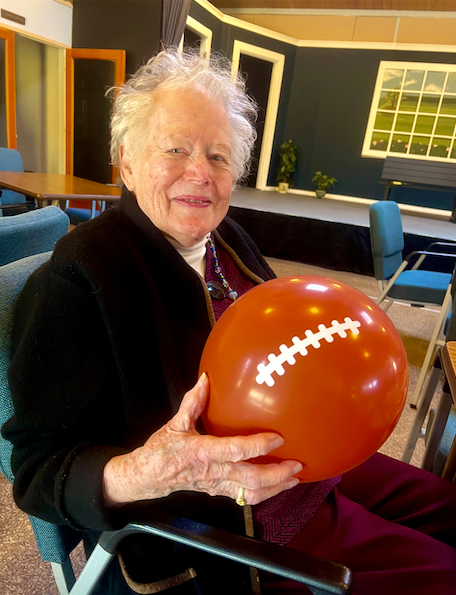
Mom. 90+ years young. Preparing for Super Bowl Sunday
When I listened to The Moth – “Stakes Are High: Caring for a Parent with ALS”, I found myself sitting very still.
What attracted me to listen to this story, was not that my mom has ALS, but that the role of her children and friends around her have slowly adopted the role of a caregiver. It’s a process and not thoroughly a dependent relationship. Mom attains her independence well, but the need for advocacy is a necessary one. It’s shared among a group of us. We rely upon one another.
I’m in my 3rd week of caregiving.
My first two weeks were with mom and my 3rd week is with my friend Jules
I know some of you think this is a nutty schedule, but I was in caregiver mode and just wanted to keep the momentum. In addition, both patients are in California so… there.
I love the Moth radio hour! It is a terrific venue for heartfelt stories on NPR. In SLC, I have found myself waiting in my car in the driveway while these stories are shared. Often leaving my vehicle teary eyed, this story was no different.
While caregiving for my friend, Jules, who lives in Sacramento - and in the midst of completing a list of errands; I found myself listening to this story in the parking lot outside of a Peets Coffee and Tea
The Moth story was a simple story on the surface.
A child caring for a parent with ALS.
A body slowly changing.
A role slowly reversing.
But beneath that simplicity is something much more layered — and very human.
Caregiving Is Relentless in Quiet Ways
In the Moth Radio Hour story, a caregiver is not portrayed as heroic in a shiny way. It is portrayed as relentless.
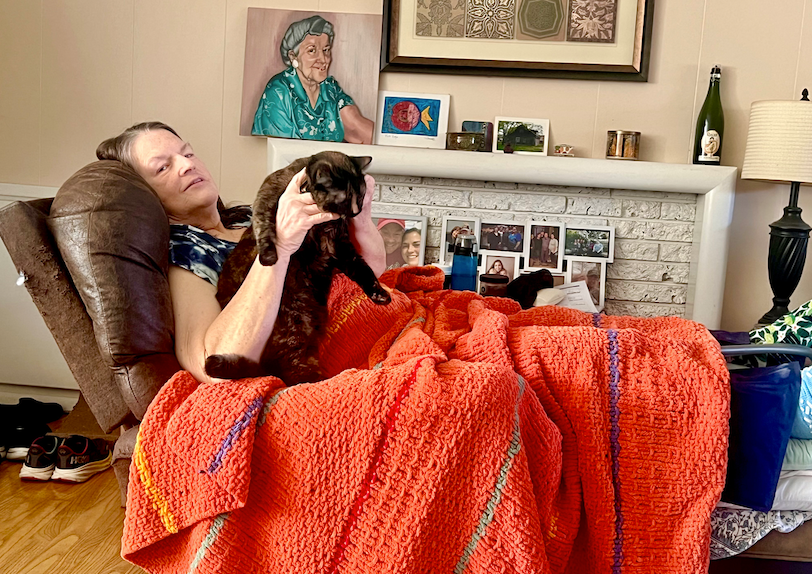
Long time friend, Jules. Full knee replacement #1
There are many times, various family members and friends have portrayed this relentless steadfastness. It’s not a burden. It's a necessity.
There are decisions.
Medical appointments.
Physical tasks that once felt unimaginable.
Moments of exhaustion.
Moments of guilt for feeling exhausted.
Caregiving becomes a constant negotiation between:
* preserving dignity
* honoring independence
* stepping in when necessary
* stepping back when possible
The role of a Caregiver is…
both logistical and deeply emotional.
I am not simply helping someone bathe or eat.
I am witnessing their autonomy change in real time, and trying to protect their identity while the recovery progresses - progressively.
Love and Commitment Amidst Struggle
What moved me most in the Moth Radio story was not the disease of ALS
It was the devotion.
There is a quiet thread running through the narrative:
I am here. I am staying.
Caregiving, in this context, becomes an act of daily commitment. Not dramatic. Not glamorous. But steady.
Love shows up in:
* adjusting schedules
* learning medical terminology
* anticipating needs
* sitting in silence
* staying present when the future feels frightening
The storyteller reveals something many caregivers know but rarely say aloud:
Love is not always soft.
Sometimes it is fierce.
Sometimes it is tired.
Sometimes it is complicated.
And yet it remains.
Caregivers Need Care Too

For those navigating cancer, ALS, chronic illness, or long seasons of uncertainty, the journey reshapes everyone involved.
The caregiver and the patient are both stretched.
And yet — in the midst of struggle — there can still be connection.
Not because it is easy.
But because commitment chooses to remain.
If you are in a season of caregiving, it may be helpful to remember that support is not only for the one receiving care.
Practices like Reiki can offer a gentle space for your nervous system to soften — a moment where you are not the strong one, not the advocate, not the organizer.
Simply supported.
If you are curious about Reiki sessions, I am currently offering them at 50% off until we transition into a new Presidential Administration.
You can learn more here:
https://www.amyconnyoga.com/reiki
Caregivers carry much.
You do not have to carry it alone.
